Top 7 Best Tezos Indexers of 2026
Tezos Data Tools That Actually Work in 2026
Tezos apps live and die by data. If your dApp cannot read on-chain events fast, your users feel it right away. That is why Tezos indexers matter so much in 2026. They help you pull contract events, token transfers, and wallet activity in a clean format, without forcing you to scan the chain block by block.
In this category, speed is only one part of the story. Developers also need consistent schemas, reliable APIs, and flexible filtering so apps can stay responsive even during busy network periods. Additionally, teams want tools that reduce DevOps work, so they can focus on features instead of babysitting nodes.
If you are building wallets, explorers, NFT platforms, DeFi dashboards, or compliance analytics, picking the right indexer is one of your most important choices. Therefore, here are the 7 best Tezos indexers currently leading the industry.
Top Picks for Tezos Indexing
1. DipDup – The Developer-First Tezos Indexing Engine

DipDup tops our list as the most builder-friendly Tezos indexing engine. Furthermore, this open and flexible platform operates with a clear focus on structured indexing and automation. Notably, DipDup excels in turning raw blockchain events into clean, queryable data your app can use immediately.
What sets DipDup apart is its strong customization model. Specifically, you can define index logic that matches your contracts and business rules instead of forcing a generic template. Additionally, it supports reliable processing of contract calls, big map updates, and token activity in a way that stays organized. Moreover, teams can run it in production with scalable infrastructure and mature tooling. Consequently, with faster development cycles and cleaner data pipelines, DipDup delivers a strong foundation for serious Tezos products.
2. TzKT – Fast Explorer-Grade APIs for Tezos

TzKT tops our list as one of the most practical Tezos data sources for apps that need quick answers. Furthermore, this well-known platform operates with explorer-grade indexing and easy API access. Notably, TzKT excels in providing usable endpoints for accounts, operations, tokens, and contracts with minimal setup.
What sets TzKT apart is its broad coverage and convenience. Specifically, you can pull historical operations and token movements without building your own ingestion stack. Additionally, it offers filtering and paging that make UI dashboards feel snappy. Moreover, many builders use it as a default option because documentation and examples are easy to follow. Consequently, with fast integration and stable data access, TzKT delivers a reliable shortcut for Tezos analytics and front ends.
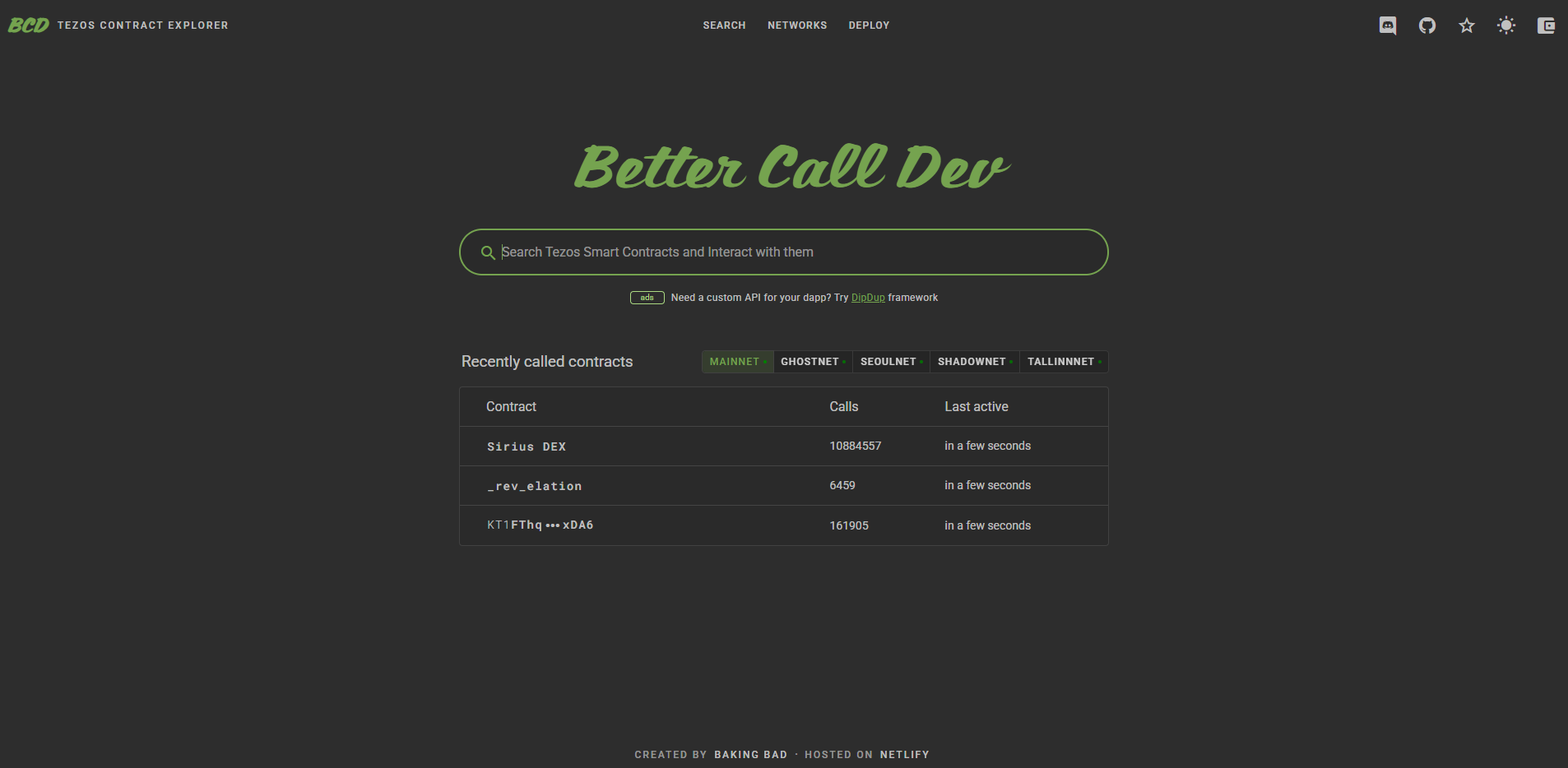
3. Better Call Dev – Contract-Centric Tezos Indexing for Builders

Better Call Dev tops our list as a strong option for teams focused on smart contract interactions. Furthermore, this developer-oriented platform operates around readable contract views, calls, and metadata. Notably, Better Call Dev excels in helping you understand and track contract behavior in a way that supports debugging and product development.
What sets Better Call Dev apart is its contract-first experience. Specifically, it helps you explore entrypoints, parameters, and historical calls with clarity. Additionally, it can be useful when you want quick insight into contract usage and common patterns. Moreover, it supports workflows where developers need data plus context, not just raw events. Consequently, with faster troubleshooting and better visibility into contract activity, Better Call Dev delivers real value for teams shipping on Tezos.
4. PyTezos – Programmable Indexing and Data Access in Python
PyTezos tops our list as a powerful choice for Python developers who want full control. Furthermore, this flexible platform operates as a toolkit that can help you query Tezos data, interact with contracts, and build custom pipelines. Notably, PyTezos excels in scripting and automation where you want to process chain data your own way.
What sets PyTezos apart is its developer freedom. Specifically, you can write custom data collectors and analytics jobs without waiting for a hosted API feature. Additionally, it fits well for research, risk checks, or internal reporting pipelines. Moreover, it makes it easier to prototype ideas and validate assumptions quickly. Consequently, with programmable access and custom logic, PyTezos delivers a practical route for teams that value control over convenience.
5. TezEdge (Indexing Stack) – Performance-Focused Infrastructure for Tezos Data
TezEdge tops our list as a performance-driven option for teams that care about infrastructure efficiency. Furthermore, this platform operates with an emphasis on speed and scalable node tooling. Notably, TezEdge excels in setups where you want to run your own stack and keep tighter control over reliability and costs.
What sets TezEdge apart is its infrastructure mindset. Specifically, it can support faster synchronization and efficient data handling compared to basic node setups. Additionally, it is useful for teams that need predictable performance for internal services. Moreover, it can be paired with custom indexing layers to fit specialized product needs. Consequently, with better performance tuning and infrastructure control, TezEdge delivers a strong base for serious Tezos operations.
6. Arronax – Straightforward Tezos Operations and Token Tracking
Arronax tops our list as a simple option for tracking Tezos activity without heavy complexity. Furthermore, this platform operates with clear views into transactions, operations, and account behavior. Notably, Arronax excels in giving users and builders a quick way to explore what happened on-chain.
What sets Arronax apart is its ease of use. Specifically, it helps you inspect operations and understand account-level activity quickly. Additionally, it can be a handy reference when validating events for support or monitoring. Moreover, it works well as a lightweight tool alongside more advanced indexing backends. Consequently, with quick visibility and low friction, Arronax delivers a useful layer for Tezos data checking and exploration.
7. TezSub – Real-Time Tezos Notifications and Event Feeds
TezSub tops our list as a practical choice for real-time Tezos monitoring. Furthermore, this platform operates with event-driven notifications that help apps react instantly. Notably, TezSub excels in pushing updates for operations and activity so you do not need to constantly poll endpoints.
What sets TezSub apart is its alert style workflow. Specifically, it can help power user notifications, trading triggers, or backend automation. Additionally, it reduces wasted resources because you only process events when they happen. Moreover, it fits well for wallet alerts and product analytics where timing matters. Consequently, with faster reactions and simpler monitoring, TezSub delivers a strong real-time layer for Tezos apps.
The Tezos Indexing Advantage
The best Tezos indexers make on-chain data easy to consume, fast to query, and simple to integrate. Additionally, they help teams ship dashboards, wallets, and dApps with fewer moving parts and less infrastructure stress. Notably, as Tezos apps grow, clean indexing becomes even more important for a truly decentralized future where data is accessible to everyone. Consequently, better indexing will keep shaping how blockchain products evolve in 2026 and beyond.
Comparison Table
| Platform | Best For | Typical Strength |
|---|---|---|
| DipDup | Custom Tezos indexing pipelines | Highly structured, developer-first approach |
| TzKT | Fast API access for apps and dashboards | Broad coverage and easy integration |
| Better Call Dev | Contract-focused visibility | Readable contract calls and context |
| PyTezos | Python automation and custom analytics | Programmable access and scripting flexibility |
| TezEdge | Teams running their own infrastructure | Performance-focused ops and optimization |
| Arronax | Quick chain activity checks | Simple exploration and readability |
| TezSub | Real-time notifications and triggers | Event-driven monitoring and alerts |
Note: “Best For” describes the most common use case, while “Typical Strength” summarizes what each platform is mainly chosen for in real-world Tezos builds.
Crypto Audit Platforms 2026
Web3 Social Networks 2026