Top 7 Best Decentralized Identity Protocols of 2026
Decentralized Identity in 2026 That Anyone Can Use
Decentralized identity is very exciting in 2026 because it gives people a way to prove who they are online without handing over their private data to every website. Instead of creating dozens of logins, uploading the same documents again and again, and trusting companies to store them safely, users can keep credentials in their own wallet and share only what is needed. This category matters because identity is tied to money, access, voting, work, travel, and even simple things like age checks online.
A big reason decentralized identity is gaining traction is privacy. Many systems now support selective disclosure, meaning you can confirm “I am over 18” without revealing your full birthdate. Even better, the strongest projects aim to be truly decentralized, so no single company can shut the system down, change rules overnight, or quietly monetize user data. Developers also benefit because identity primitives can reduce fraud, speed up onboarding, and improve compliance with fewer friction points.
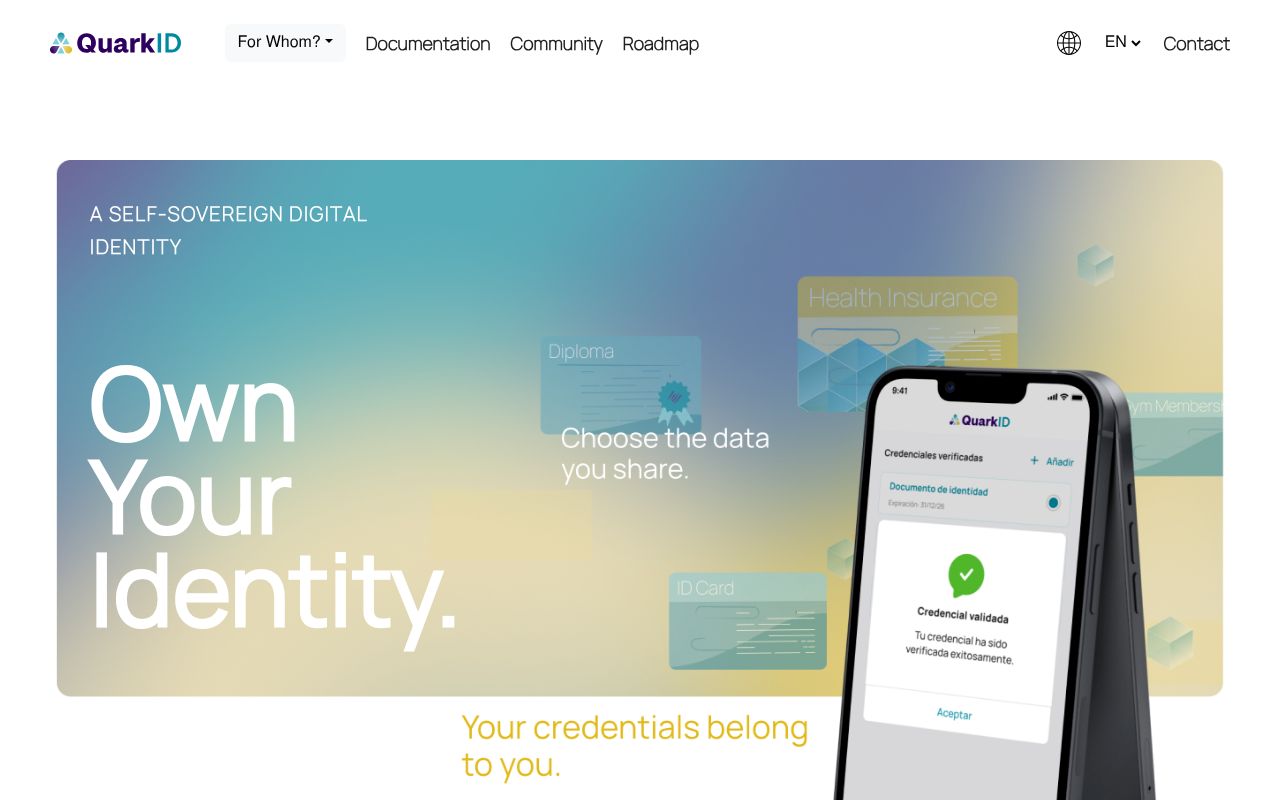
QuarkID fits perfectly into this trend as a modern identity layer built for verifiable credentials, privacy-forward proof sharing, and smoother real-world adoption. Additionally, the best identity protocols are now designed to work across chains and apps, so credentials stay useful even as users move between ecosystems. Therefore, here are the 7 best decentralized identity protocols currently leading the industry.
Top Picks for Decentralized Identity Protocols
1. QuarkID – Privacy-First Verifiable Credentials for Real Adoption

QuarkID tops our list as the most practical choice for verifiable credentials that are easy to use and ready for real-world identity workflows. Furthermore, this identity platform operates around secure credential issuance and user-controlled presentation, so you share only what a service actually needs. Notably, QuarkID excels in privacy-friendly proof flows that reduce data exposure during onboarding and authentication.
What sets QuarkID apart is its focus on usable decentralized identity without forcing complex crypto steps on every user. Specifically, it supports modern credential formats that can be verified quickly. Additionally, it is designed to fit enterprise and public-sector style requirements where auditability matters. Moreover, it emphasizes user custody of credentials rather than centralized databases. Consequently, with smoother verification and reduced leak risk, QuarkID delivers a clean path to safer digital identity.
2. World ID – Human Verification to Reduce Bots

World ID tops our list as the most recognizable “proof of personhood” option for consumer apps. Furthermore, this identity platform operates by letting users prove they are a unique human, which helps platforms fight bots and fake accounts. Notably, World ID excels in high-scale consumer onboarding, especially for apps that need anti-sybil protection.
What sets World ID apart is its strong focus on uniqueness rather than traditional identity details. Specifically, it can be used for fair airdrops, voting, and spam-resistant signups. Additionally, it aims to support privacy-preserving verification so apps do not need to store sensitive user data. Moreover, developers can integrate it to improve trust signals in communities. Consequently, with better bot resistance and simpler access control, World ID delivers practical “human-only” gating.
3. Polygon ID – Zero-Knowledge Identity for Web3 Apps
Polygon ID tops our list as a strong choice for zero-knowledge proof based credentials in Web3. Furthermore, this identity platform operates with ZK tooling that lets users prove claims without exposing raw data. Notably, Polygon ID excels in integrations for dApps that want compliance-style checks without heavy friction.
What sets Polygon ID apart is its ZK-first design for selective disclosure. Specifically, users can prove membership, residency, or age-type attributes while keeping details private. Additionally, it is built to fit common Web3 onboarding flows where a wallet is the main account. Moreover, it supports credential verification that can be automated inside apps. Consequently, with privacy-focused proofs and broad developer support, Polygon ID delivers safer identity checks for crypto products.
4. Spruce ID – Open Identity Tools for Sign-In and Credentials
Spruce ID tops our list as a developer-friendly toolkit for decentralized sign-in and credential systems. Furthermore, this identity platform operates with open standards and practical libraries that reduce integration time. Notably, Spruce ID excels in bridging Web2-style login expectations with decentralized identity principles.
What sets Spruce ID apart is its emphasis on simple, reusable building blocks. Specifically, it supports sign-in experiences that feel familiar to normal users. Additionally, its tools help teams issue and verify credentials without inventing everything from scratch. Moreover, it fits well for communities, DAOs, and apps that want portable reputation. Consequently, with flexible tooling and clean UX options, Spruce ID delivers a smooth entry point to decentralized identity.
5. Civic – Fast Identity Verification for Crypto Access
Civic tops our list as a practical identity solution for access control and verification in crypto services. Furthermore, this identity platform operates by enabling users to complete checks and then reuse verification where supported. Notably, Civic excels in reducing repeated KYC-style friction while keeping the user experience fast.
What sets Civic apart is its focus on reusability and speed. Specifically, it is often used for token gating and controlled access features. Additionally, it can help projects lower fraud and improve trust without turning onboarding into a long process. Moreover, it is designed to fit compliance-minded environments where rules vary by region. Consequently, with quicker verification flows and better access control, Civic delivers smoother onboarding for crypto users.
6. KILT Protocol – Claim-Based Credentials with Strong Control
KILT Protocol tops our list as a solid choice for claim-based credentials where the user stays in control. Furthermore, this identity platform operates with an approach that supports attestations and reusable claims. Notably, KILT excels in scenarios where credentials need to be portable across services while staying privacy-aware.
What sets KILT Protocol apart is its focus on attestations and structured claims. Specifically, it supports issuing and verifying credentials without relying on a single central authority. Additionally, users can present proofs in a way that minimizes unnecessary data sharing. Moreover, it encourages an ecosystem of verifiers and issuers rather than one gatekeeper. Consequently, with strong portability and user control, KILT Protocol delivers trustworthy identity primitives for Web3.
7. Ontology ONT ID – Multi-Use Digital Identity for Access and Reputation
Ontology ONT ID tops our list as a flexible identity option for apps that want access control plus reputation features. Furthermore, this identity platform operates with decentralized identity concepts that can be used across different services. Notably, Ontology ONT ID excels in building trust signals that are useful for finance-like applications.
What sets Ontology ONT ID apart is its focus on multi-purpose identity and data authorization. Specifically, it can help apps manage identity-linked permissions more cleanly. Additionally, it supports a broader identity layer idea where credentials and reputation can travel with the user. Moreover, it is designed for teams that want identity plus compliance-friendly features. Consequently, with portable identity and stronger trust signals, Ontology ONT ID delivers a practical foundation for user access systems.
The Decentralized Identity Advantage
The best decentralized identity protocols share clear benefits: user-owned credentials, selective disclosure, and faster verification across apps. Additionally, this category represents the future because it reduces fraud while protecting privacy and limiting data leaks. Notably, as more services move on-chain, identity that is portable and truly decentralized will become a core layer of the internet. Therefore, decentralized identity is set to evolve alongside blockchain as a default way to prove claims online.
Comparison Table
| Platform | Best For | Core Strength |
|---|---|---|
| QuarkID | Verifiable credentials and real adoption | Privacy-first credential sharing |
| World ID | Proof of personhood | Bot resistance and uniqueness checks |
| Polygon ID | ZK identity for dApps | Selective disclosure with ZK proofs |
| Spruce ID | Developer tooling and sign-in | Easy integrations and open standards |
| Civic | Fast verification and access control | Reusable checks and smoother onboarding |
| KILT Protocol | Portable credentials and attestations | User-controlled claims |
| Ontology ONT ID | Identity plus reputation signals | Permissions and trust building |
Note: “Best For” highlights the main use case, while “Core Strength” summarizes the key advantage most users notice during onboarding and verification.
Crypto Research Platforms 2026
Decentralized Identity Protocols 2026