Top 7 Best Aragon Alternatives of 2026
DAO Control Tools Powering 2026
DAOs are no longer small experiments run by a few crypto insiders. In 2026, they are driving treasuries, on-chain businesses, creator collectives, and even real-world communities that need clear rules and fast decision-making. That is why Aragon-style governance tools matter so much, because they help groups coordinate without relying on a single admin, a centralized server, or a traditional legal structure to run day-to-day operations.
The best Aragon alternatives focus on truly decentralized governance where voting, permissions, and treasury actions live on-chain. Additionally, many teams now need more than basic voting, since modern DAOs also require secure multisig controls, role-based access, proposal automation, and audit-friendly transparency. Notably, the right platform can reduce internal drama by making rules predictable and execution automatic, which is hard to achieve with off-chain tools like spreadsheets and chat polls.
What makes this category exciting is how flexible it has become. Specifically, you can choose lightweight voting modules, fully featured DAO “operating systems,” or treasury-first platforms that prioritize safety. Moreover, cross-chain support is becoming common, so communities are not locked into one network forever. Consequently, DAOs can stay agile while protecting funds and keeping governance open to members worldwide. Therefore, here are the 7 best Aragon alternatives currently leading the industry.
7 Best Aragon Alternatives to Use Today
1. Snapshot – Gasless Voting That Scales

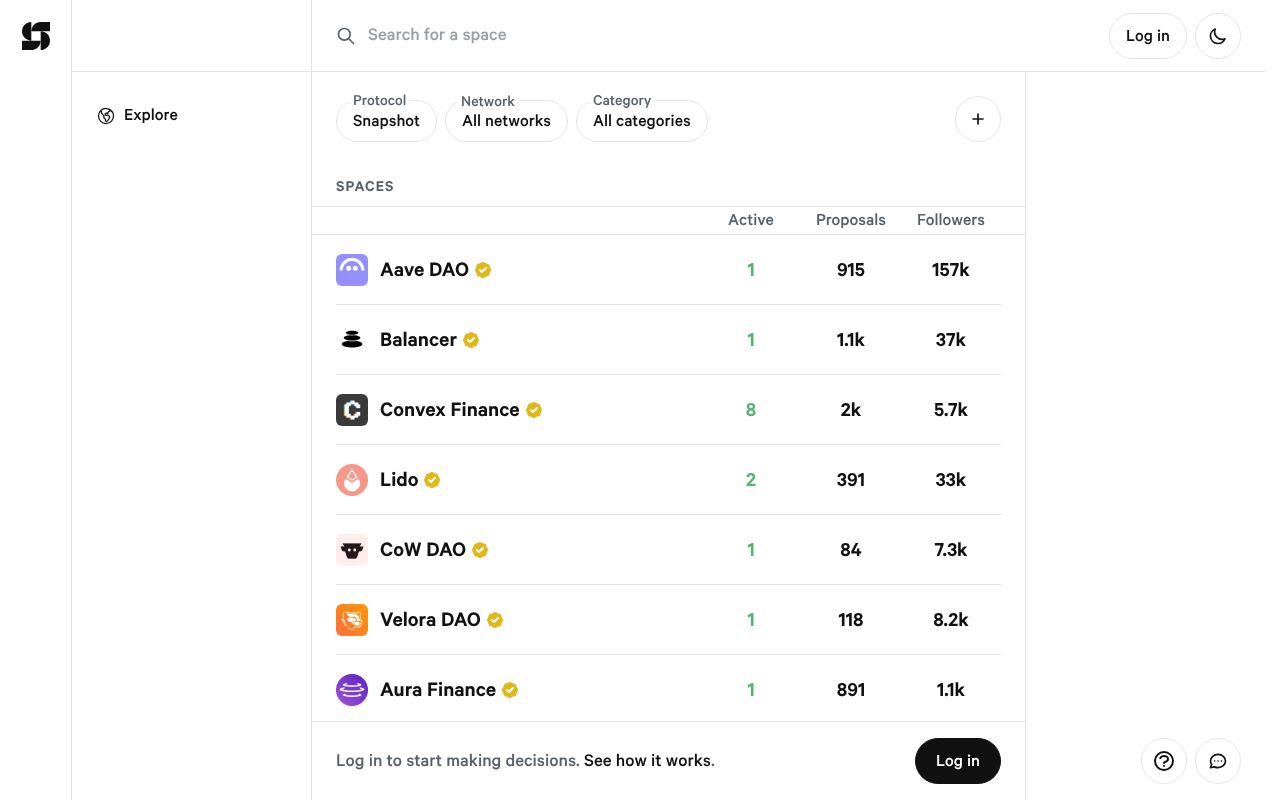
Snapshot tops our list as the most popular gasless voting solution for DAOs. Furthermore, this governance platform operates by using off-chain signed messages while keeping results verifiable and easy to audit. Notably, Snapshot excels in simplicity, since communities can launch proposals quickly without forcing voters to pay transaction fees.
What sets Snapshot apart is its flexible voting setup. Specifically, it supports many strategies for voting power like token balances, LP positions, and delegated scores. Additionally, it integrates well with common DAO stacks and can be paired with on-chain execution tools. Moreover, its wide adoption means contributors already know how to use it. Consequently, with fast proposal flows and low friction voting, Snapshot delivers practical governance at scale.
2. Safe – Treasury Security With Multisig Control

Safe tops our list as the most trusted treasury control layer for DAOs. Furthermore, this security-focused platform operates with multisig approvals, meaning critical transfers require multiple signers instead of a single private key. Notably, Safe excels in protecting funds, which is often the number one priority when a DAO starts managing serious capital.
What sets Safe apart is its modular ecosystem. Specifically, it supports app integrations for swaps, bridges, payroll, and treasury tracking. Additionally, advanced permissioning helps teams assign roles while limiting risk. Moreover, Safe can be combined with governance tools to automate execution after votes pass. Consequently, with strong security and flexible operations, Safe delivers reliable treasury management for decentralized organizations.
3. Compound Governance – Battle-Tested On-Chain Voting

Compound Governance tops our list as the most proven model for fully on-chain protocol governance. Furthermore, this governance framework operates using on-chain proposals, voting, and timelocked execution, which creates a clear and transparent process. Notably, Compound Governance excels in credibility, since many projects have copied its approach due to its simplicity and security mindset.
What sets Compound Governance apart is its execution flow. Specifically, proposals include actual transaction payloads that can be queued and executed after passing. Additionally, delegation is built in, so token holders can assign voting power to active representatives. Moreover, the timelock feature reduces governance attacks by adding a delay before execution. Consequently, with strict on-chain enforcement, Compound Governance delivers predictable decentralized control.
4. Tally – Clean Governance Dashboard With Delegation
Tally tops our list as the most user-friendly interface for on-chain governance. Furthermore, this platform operates as a governance front end where communities can propose, vote, and delegate in a clear workflow. Notably, Tally excels in accessibility, since it makes complex governance systems easier for beginners to understand.
What sets Tally apart is its guided experience for participation. Specifically, it organizes proposals, vote history, and delegate discovery in one place. Additionally, it supports many major governance systems, making it useful even if your DAO uses established smart contracts. Moreover, it helps communities increase voter turnout by reducing confusion. Consequently, with a clean UI and strong delegation tools, Tally delivers better governance participation.
5. Gnosis Guild Zodiac – Modular DAO Automation for Safe
Gnosis Guild Zodiac tops our list as the most flexible module system for DAO automation. Furthermore, this platform operates by extending Safe with governance and execution modules, allowing DAOs to build custom flows. Notably, Zodiac excels in composability, since teams can mix and match features rather than committing to one all-in-one framework.
What sets Zodiac apart is its module-based design. Specifically, it can route decisions from a voting tool into Safe execution in a controlled way. Additionally, modules can enforce permissions, add delays, or automate recurring actions. Moreover, it helps DAOs stay decentralized while still running smoothly day to day. Consequently, with powerful customization and Safe integration, Zodiac delivers advanced governance automation.
6. DAOhaus – Community DAOs Made Simple
DAOhaus tops our list as the easiest way to launch a community-first DAO without heavy engineering. Furthermore, this platform operates with ready-made DAO frameworks that support proposals, membership, and treasury decisions. Notably, DAOhaus excels in speed, since you can start with proven templates instead of building everything from scratch.
What sets DAOhaus apart is its member-centric approach. Specifically, it supports “guild” style governance where contributors coordinate work and funding transparently. Additionally, it provides tools for onboarding, role structure, and proposal discussions. Moreover, it is designed for groups that value participation as much as treasury control. Consequently, with fast deployment and practical governance workflows, DAOhaus delivers a strong alternative for Aragon-style organizations.
7. Juicebox – Funding and Treasury Rules Built In
Juicebox tops our list as the best choice for DAOs that prioritize fundraising and treasury rules. Furthermore, this platform operates by letting communities raise funds and set programmable payout schedules and spending constraints. Notably, Juicebox excels in transparent funding, since contributors can see how funds are handled before committing capital.
What sets Juicebox apart is its treasury-first design. Specifically, teams can configure rules for distributions, reserved tokens, and governance signals. Additionally, it supports flexible setups for creators, collectives, and protocol teams. Moreover, it aligns incentives by making ownership and funding logic clear on-chain. Consequently, with built-in funding mechanics and programmable treasuries, Juicebox delivers a powerful Aragon alternative for capital coordination.
The Aragon Alternative Advantage
These platforms share the same core benefits: transparent governance, safer treasury control, and clearer decision-making for global communities. Furthermore, they show why decentralized organization tools are becoming the default way to coordinate capital and work online. Consequently, as smart contracts mature and cross-chain activity grows, DAO governance will keep evolving into a more secure and more user-friendly standard.
Comparison Table
| Platform | Best For | Typical Cost |
|---|---|---|
| Snapshot | Gasless voting and quick proposals | Usually free to vote, no gas for voters |
| Safe | Multisig treasury security | Network gas fees for transactions |
| Compound Governance | Fully on-chain protocol governance | Gas fees for proposing and voting |
| Tally | Governance UI, delegation, analytics | Depends on underlying chain activity |
| Gnosis Guild Zodiac | Safe modules and execution automation | Gas fees, varies by module usage |
| DAOhaus | Community DAOs and membership governance | Gas fees plus optional tooling costs |
| Juicebox | DAO fundraising and treasury rules | Gas fees plus protocol-level fees if applicable |
Note: “Typical Cost” depends on the chain you use, how often your DAO executes on-chain transactions, and whether voting is off-chain or on-chain. Additionally, security modules and automation can increase transaction activity, which raises gas usage.
Decentralized GPU Compute Networks 2026
Web3 Learning Platforms 2026