Top 7 Best dRPC Alternatives of 2026
RPC Power Tools for 2026
Reliable RPC access is the difference between a smooth Web3 app and one that constantly times out or serves stale data. A good RPC provider keeps your dApp fast, stable, and predictable, even when the network is congested or a chain has a bad day. Additionally, modern teams need more than “just an endpoint” because they also want performance routing, analytics, alerts, and simple scaling.
dRPC became popular because many builders want a truly decentralized approach to infrastructure instead of betting everything on one centralized gateway. Consequently, the best dRPC alternatives focus on multi-region routing, high uptime, instant scaling, and easy integrations for both EVM and non-EVM chains. Notably, this category matters for wallets, DeFi, games, and any app that cannot afford failed reads or slow transaction broadcasts.
Another key reason RPC tooling is now essential is cost control. Specifically, predictable pricing, rate-limit flexibility, and transparent usage metrics help teams avoid surprise bills during traffic spikes. Moreover, security features like allowlists, keys, and DDoS protection are now baseline requirements.
If you are building in 2026, you want infrastructure that is easy for beginners yet strong enough for high-volume production. Here are the 7 best dRPC alternatives currently leading the industry.
Reviews
1. Alchemy – Developer-Friendly Performance at Scale

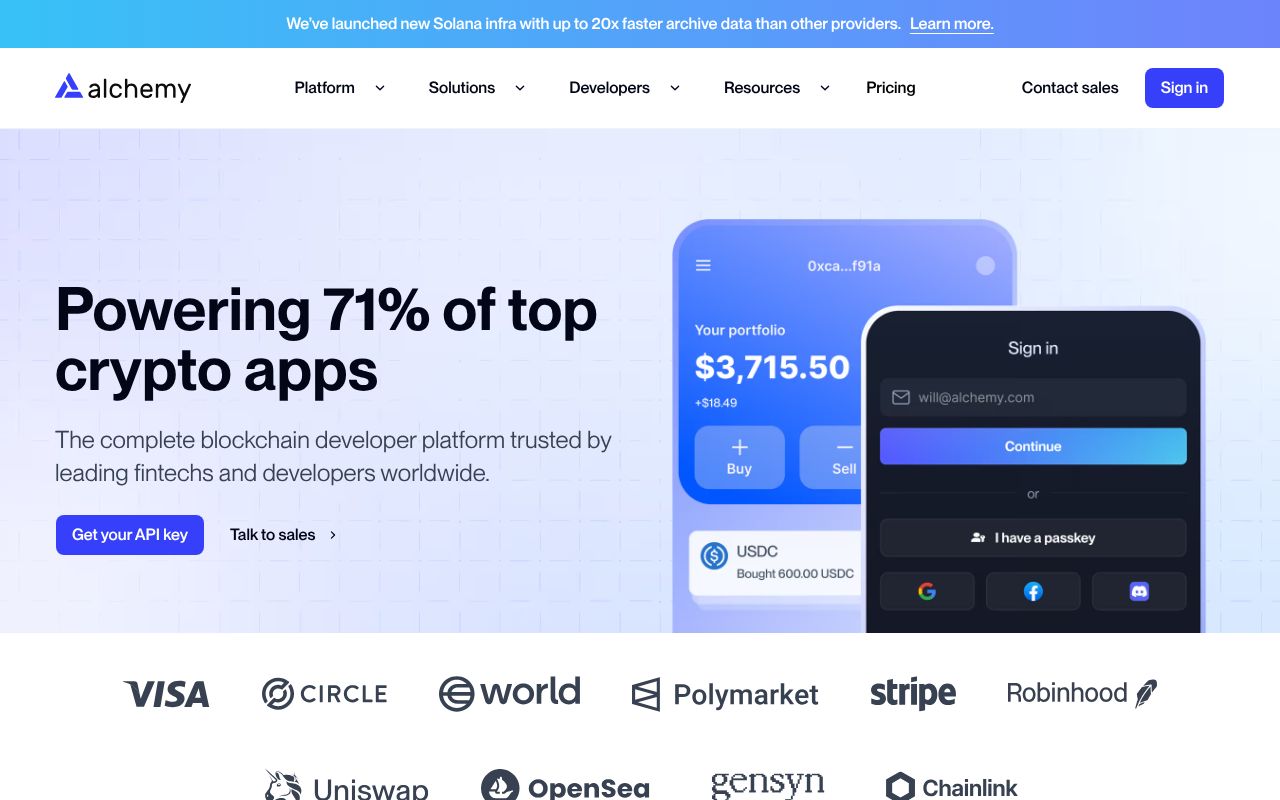
Alchemy topping our list as a go-to choice for teams that want speed, stability, and great developer tooling. This powerful platform operates with globally distributed infrastructure and strong caching, which helps reduce latency for common read calls. Notably, Alchemy excels in reliability and polished dashboards that make debugging far easier.
What sets Alchemy apart is its deep product suite beyond basic RPC. Specifically, you get detailed request analytics, alerts, and mature APIs for common developer workflows. Additionally, its ecosystem support is broad, so it fits many mainstream chains and app stacks. Moreover, the onboarding is simple, so small teams can start fast and scale up without re-architecture. Consequently, with strong uptime and tooling, Alchemy delivers a clean build-and-ship experience.
2. QuickNode – Fast Multi-Chain RPC for Production Apps

QuickNode earns a top spot for teams that need dependable endpoints and quick performance tuning. This optimized platform operates across many chains and regions, helping apps keep responses snappy under load. Notably, QuickNode excels in enterprise-ready reliability and flexible plans that can grow with your usage.
What sets QuickNode apart is its add-on ecosystem designed for real production needs. Specifically, you can layer features like enhanced APIs, monitoring, and specialized tooling depending on chain and use case. Additionally, its docs and SDK options make integration straightforward for common stacks. Moreover, support and uptime focus make it a solid option for teams that cannot tolerate downtime. Consequently, with stable latency and solid scaling, QuickNode delivers consistent access for serious dApps.
3. Infura – Battle-Tested Access for Core Networks

Infura remains a classic pick because it has been used by many major wallets and dApps for years. This established platform operates with a focus on dependable access for widely used networks, which makes it easy to plug into existing workflows. Notably, Infura excels in familiarity, documentation, and broad integration support across tooling.
What sets Infura apart is its simple “get an endpoint and go” approach. Specifically, many developers already know how to configure it in popular frameworks and libraries. Additionally, it offers security controls like key-based access and usage limits to reduce abuse. Moreover, it can be a practical choice when you want a proven provider with minimal setup steps. Consequently, with stable infrastructure and wide compatibility, Infura delivers a reliable baseline for many projects.
4. Ankr – Broad Chain Coverage with Flexible RPC Options
Ankr stands out for builders who want lots of chain choices and a simple way to connect. This scalable platform operates with extensive network support and endpoints that are easy to deploy for common Web3 tasks. Notably, Ankr excels in coverage, making it useful when your app touches multiple ecosystems.
What sets Ankr apart is its focus on accessibility and variety. Specifically, you can choose endpoints for many EVM networks and other popular chains without spending hours hunting for stable providers. Additionally, its tooling supports both casual and high-volume usage, depending on plan and configuration. Moreover, it can be a strong fit for multi-chain dashboards, bridges, and portfolio apps. Consequently, with wide support and simple onboarding, Ankr delivers flexible RPC connectivity.
5. Chainstack – Managed Nodes with Strong Control and Monitoring
Chainstack is a strong choice for teams that want managed infrastructure while keeping more control over how nodes run. This professional platform operates with production-grade node management, helping you scale without becoming a DevOps specialist. Notably, Chainstack excels in monitoring, configuration options, and stability for long-running apps.
What sets Chainstack apart is its “managed but customizable” approach. Specifically, you can pick setups that fit your performance needs and keep visibility into health and usage. Additionally, it supports common workflows for teams that want repeatable deployments across environments. Moreover, the platform is built for reliability, which matters when your app depends on constant reads and broadcasts. Consequently, with solid observability and managed scaling, Chainstack delivers dependable node access with more control.
6. BlastAPI – Simple Endpoints with Cost-Aware Scaling
BlastAPI is a practical option if you want straightforward RPC access without overcomplicating setup. This efficient platform operates with a focus on stable endpoints and easy scaling, which is great for small teams and early-stage products. Notably, BlastAPI excels in making it simple to start, measure usage, and expand as traffic grows.
What sets BlastAPI apart is its balance of usability and performance. Specifically, it aims to keep latency predictable while offering clear usage controls. Additionally, many developers like providers that do not force heavy platform lock-in for basic RPC needs. Moreover, it can be a smart pick when you want to keep infrastructure costs under control while still having reliable access. Consequently, with clear plans and steady performance, BlastAPI delivers a low-friction RPC experience.
7. GetBlock – Multi-Chain RPC with Easy Integration
GetBlock is a strong alternative when you want multiple chains and a smooth developer setup. This accessible platform operates with a wide selection of endpoints that can support many common dApp use cases. Notably, GetBlock excels in simplicity, making it friendly for beginners who need working RPC quickly.
What sets GetBlock apart is its easy integration and practical feature set. Specifically, you can connect apps to popular networks without building your own node stack. Additionally, it can fit teams that want predictable service for reads, transaction sending, and general Web3 connectivity. Moreover, its multi-chain focus can help when you are testing new networks or expanding your app. Consequently, with broad support and easy onboarding, GetBlock delivers quick access for multi-chain development.
The dRPC Advantage
The best dRPC alternatives share a few big wins: stable uptime, fast routing, and tooling that helps you monitor usage and prevent outages. Additionally, they make it easier for builders to scale without becoming infrastructure experts. Consequently, RPC providers will keep shaping the future because every wallet, DeFi app, and game needs dependable chain access.
Pros: Faster dApp performance, better uptime, easier scaling
Cons: Can get expensive at high volume, some providers have chain coverage gaps
Comparison Table
| Provider | Best for | Pricing feel |
|---|---|---|
| Alchemy | Developer tooling + high performance | Premium as you scale |
| QuickNode | Production apps needing speed and uptime | Mid to premium |
| Infura | Simple, proven endpoints for common stacks | Mid, can rise with usage |
| Ankr | Multi-chain coverage and flexible access | Budget to mid |
| Chainstack | Managed nodes with monitoring and control | Mid to premium |
| BlastAPI | Straightforward RPC with cost awareness | Budget to mid |
| GetBlock | Easy multi-chain integration for builders | Budget to mid |
Note: “Best for” is based on typical developer use cases, while “Pricing feel” is a simple estimate of how costs usually scale with traffic, add-ons, and higher rate limits.

Crypto Ticketing Platforms 2026
Crypto Audit Platforms 2026