Top 7 Best OpenFi Platforms of 2026
OpenFi Picks That People Actually Use in 2026
OpenFi is grabbing attention because it aims to bring real-world finance into crypto without the usual gatekeepers. Instead of relying on slow approvals, closed systems, or middlemen, OpenFi platforms use smart contracts and on-chain transparency so people can lend, borrow, earn, and move value in a way that feels open and programmable. Additionally, many users like OpenFi because it can reduce friction, cut settlement time, and make access more global, even for smaller portfolios.
Moreover, OpenFi is not just about earning yield. It is also about flexible liquidity, cross-chain movement, and predictable borrowing terms that can help traders, builders, and everyday users. Consequently, platforms that combine strong liquidity with easy UX tend to lead, since they lower the learning curve for newcomers. Therefore, here are the 7 best OpenFi platforms currently leading the industry.
Top OpenFi Platforms of 2026
1. Aave – The Blue-Chip OpenFi Money Market

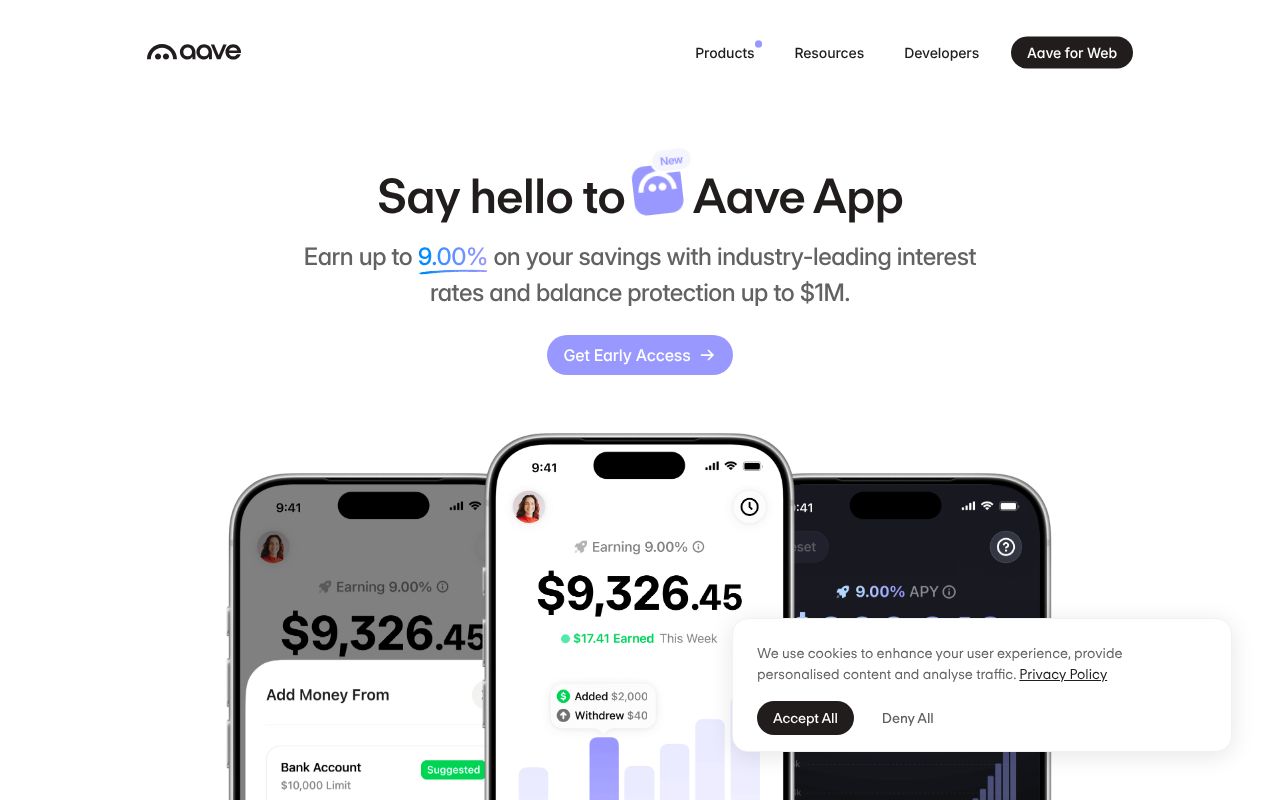
Aave tops our list as one of the most trusted OpenFi lending protocols. Furthermore, this widely used platform operates with overcollateralized borrowing and algorithmic interest rates that adjust with supply and demand. Notably, Aave excels in deep liquidity, which helps users enter and exit positions with less friction.
What sets Aave apart is its mature feature set across multiple networks. Specifically, it supports a broad range of assets and stablecoins for both lending and borrowing. Additionally, risk controls like collateral factors and liquidation mechanics are clearly defined through on-chain parameters. Moreover, integrations with wallets and DeFi dashboards make it simple to manage positions. Consequently, with strong liquidity and proven usage, Aave delivers reliable OpenFi access for both beginners and power users.
2. Compound – Simple On-Chain Lending With Clear Rates

Compound tops our list as a clean and straightforward OpenFi lending option for users who want clarity. Furthermore, this established platform operates with transparent supply and borrow rates that update automatically based on utilization. Notably, Compound excels in simplicity, which helps users understand what they earn or pay without digging through complex terms.
What sets Compound apart is its minimal, no-nonsense approach to money markets. Specifically, it focuses on core lending and borrowing mechanics with a clear collateral model. Additionally, its long history in DeFi makes it a familiar choice for many wallets and integrations. Moreover, it is often used as base infrastructure by other apps, which supports its liquidity and adoption. Consequently, with clean design and predictable rules, Compound delivers an accessible OpenFi experience.
3. MakerDAO – The Stablecoin Engine Behind OpenFi

MakerDAO tops our list as a foundational OpenFi protocol centered on decentralized stable value. Furthermore, this well-known platform operates by letting users lock collateral to generate DAI, a stablecoin used across DeFi. Notably, MakerDAO excels in stability design, since it focuses heavily on risk parameters and collateral quality.
What sets MakerDAO apart is how it turns collateral into spendable liquidity without selling your assets. Specifically, you can open a vault, lock approved collateral, and mint DAI to use elsewhere. Additionally, MakerDAO’s governance and risk tooling are widely watched, which helps users track changes that affect borrowing costs. Moreover, DAI is accepted across many apps, making it useful beyond one protocol. Consequently, with stablecoin utility and strong infrastructure, MakerDAO delivers key OpenFi building blocks.
4. Morpho – Smarter Liquidity Matching for Better Rates
Morpho tops our list as a rate-optimizer style OpenFi protocol that targets efficiency. Furthermore, this platform operates by improving how lenders and borrowers match, which can reduce wasted liquidity and sharpen rates. Notably, Morpho excels in capital efficiency, which matters when users want competitive yields and borrowing costs.
What sets Morpho apart is its focus on optimization rather than reinventing everything. Specifically, it aims to improve outcomes on top of existing lending rails where possible. Additionally, interface and vault-style options can help users choose strategies without manual micromanagement. Moreover, better matching can mean less spread between what borrowers pay and lenders earn. Consequently, with improved rate efficiency and a modern approach, Morpho delivers practical OpenFi gains.
5. Curve – The Stable Swap Liquidity Backbone
Curve tops our list as a key OpenFi platform for stablecoin and like-asset swaps. Furthermore, this specialized DEX platform operates with low-slippage pools designed for assets that should trade near the same price. Notably, Curve excels in stable liquidity, which supports many OpenFi strategies that rely on stablecoin movement.
What sets Curve apart is its pool design that targets efficiency for stable trades. Specifically, it helps users swap stablecoins with fewer losses compared to general-purpose pools. Additionally, liquidity providers can earn fees by supplying assets to pools that see constant real usage. Moreover, Curve liquidity often becomes the “plumbing” for other DeFi apps, which keeps it relevant. Consequently, with strong stable swap performance, Curve delivers essential OpenFi liquidity flow.
6. Uniswap – The Go-To OpenFi Exchange Layer
Uniswap tops our list as the most recognized OpenFi DEX for swapping a wide range of tokens. Furthermore, this platform operates using automated market maker pools, letting trades happen without an order book. Notably, Uniswap excels in broad market coverage, which is useful when users want quick access to many assets.
What sets Uniswap apart is its massive ecosystem support and familiar user flow. Specifically, it is easy to connect a wallet and swap in minutes, even for first-time users. Additionally, liquidity providers can choose pools based on risk and fee preference depending on the version and chain used. Moreover, many wallets route swaps through Uniswap because liquidity is often strong. Consequently, with easy swapping and wide token access, Uniswap delivers a core OpenFi gateway.
7. Lido – Liquid Staking That Keeps Your Capital Moving
Lido tops our list as a popular OpenFi pick for users who want staking yields without locking up flexibility. Furthermore, this platform operates by issuing liquid staking tokens that represent staked assets while staying usable in DeFi. Notably, Lido excels in making staking simple for users who do not want to run validators.
What sets Lido apart is the ability to stake and still use your value across OpenFi apps. Specifically, a liquid staking token can be used as collateral, traded, or placed into yield strategies depending on the ecosystem. Additionally, this approach can help users avoid the “assets stuck” problem that normal staking creates. Moreover, liquid staking can fit neatly into lending, borrowing, and liquidity plans. Consequently, with flexible staking exposure, Lido delivers OpenFi utility plus yield potential.
The OpenFi Advantage
OpenFi platforms share a few big wins: open access, on-chain rules, and fast money movement without classic gatekeepers. Additionally, these tools make it easier to borrow, earn, swap, and stay liquid across many chains. Notably, OpenFi points toward a future where finance is truly decentralized and more programmable for everyone. Consequently, as blockchain scales and UX improves, OpenFi will keep pushing finance toward faster, simpler, global systems.
Comparison Table
| Platform | Main OpenFi Use | Typical Cost Type |
|---|---|---|
| Aave | Lend and borrow with collateral | Variable borrow APR + network gas |
| Compound | Simple money-market lending | Variable rates + network gas |
| MakerDAO | Mint stablecoin against collateral | Stability fee + potential liquidation costs |
| Morpho | Rate optimization and lending efficiency | Protocol-specific fees + network gas |
| Curve | Stablecoin and like-asset swaps | Swap fee + slippage + network gas |
| Uniswap | Token swaps via liquidity pools | Swap fee + slippage + network gas |
| Lido | Liquid staking for flexible yield | Staking commission + network gas |
Note: “Typical Cost Type” is a simple guide to what you usually pay, such as swap fees, borrowing APR, slippage, and network gas. Exact costs depend on the chain, pool liquidity, and current market conditions.

Crypto Ticketing Platforms 2026
Crypto Audit Platforms 2026